
Higher education institutions often assess their innovation capacity, define strategic priorities and deliver entrepreneurship training as separate activities. Within PIONEER+, these elements were brought together through an integrated methodology combining HEInnovate and EntreComp, creating a structured pathway from institutional diagnosis to strategic action and competence development.
Developed and tested across six participating higher education institutions, the approach connected senior leadership engagement, institutional planning, competence assessment and capacity-building activities within one continuous process.
From institutional diagnosis to strategic action
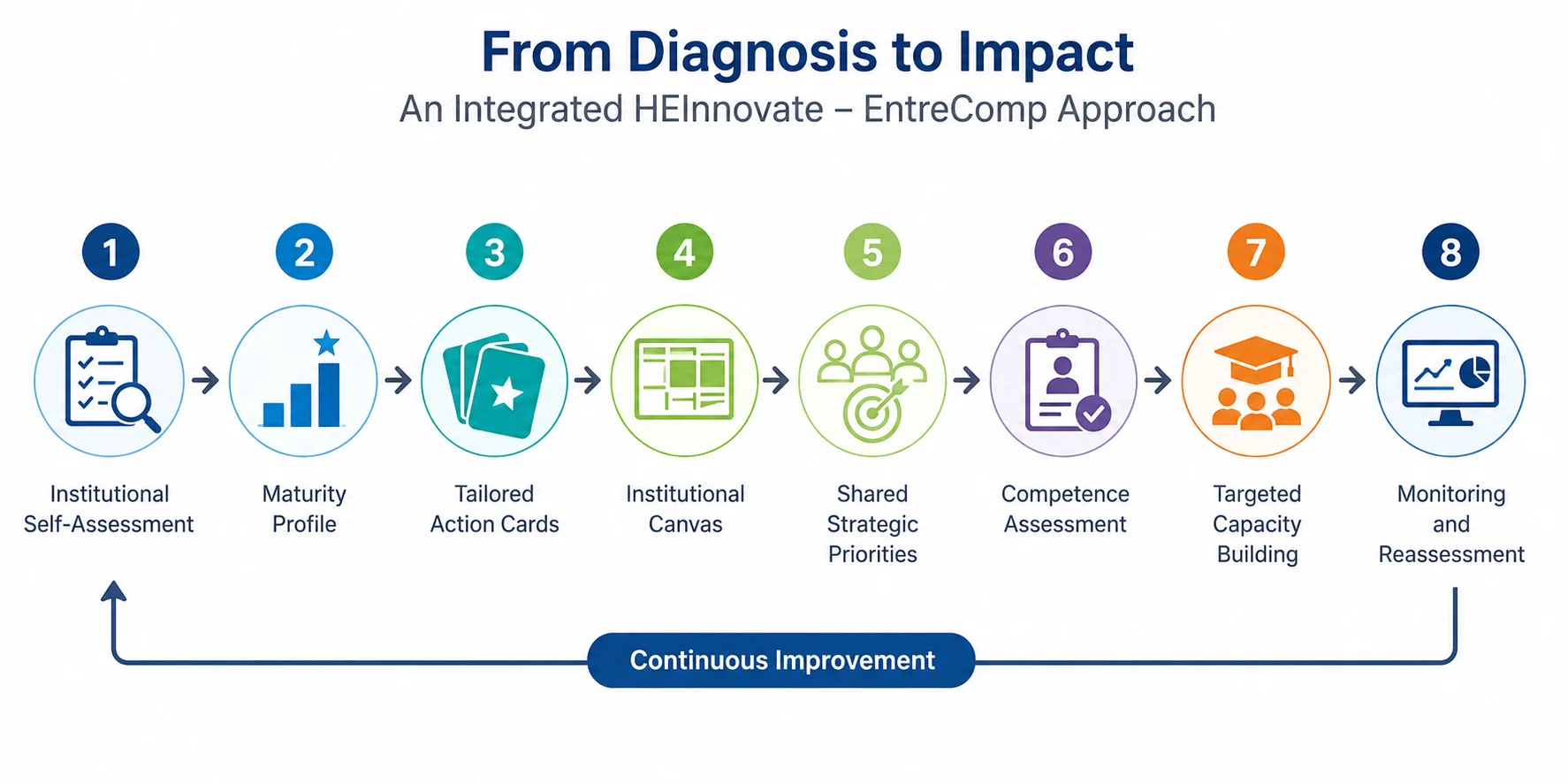
The first stage of the methodology was based on the HEInnovate self-assessment, which was used to evaluate the entrepreneurial and innovation capacity of each participating institution.
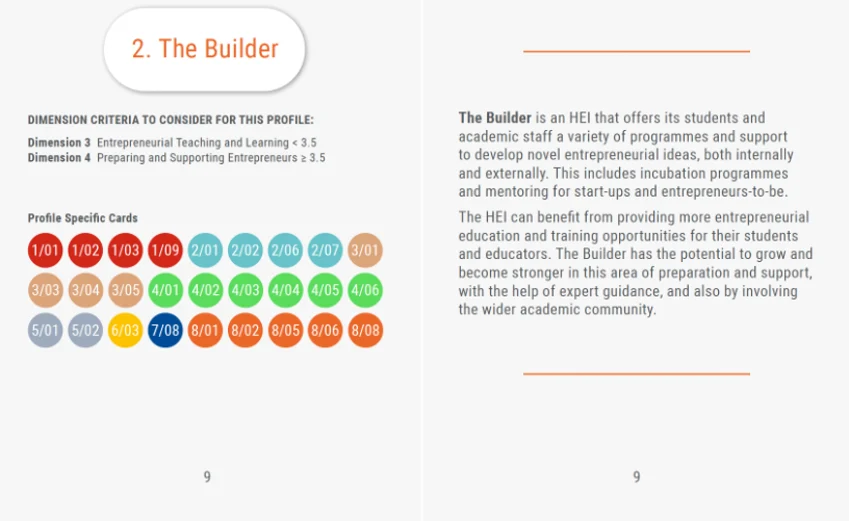
The results were translated into institutional maturity profiles, such as Regional Performer, Builder, Internal Performer, Educator or Entrepreneurial Aspirant. Rather than applying the same recommendations across all institutions, each HEI worked with a profile-specific set of HEInnovate Action Cards aligned with its own level of maturity and strategic needs. EIT_Good Practice_PIONEER+_v.04
Senior management teams reviewed the proposed actions according to four criteria:
➖ achievability
➖ alignment with the institution’s entrepreneurial agenda
➖ resource availability
➖ potential for early results. EIT_Good Practice_PIONEER+_v.04
The selected actions were then transferred to the HEInnovate Canvas, where each institution developed a concise mission statement, strategic priorities and an initial Plan to Action. Together, these elements formed the basis of its Institutional Vision and Action Plan.
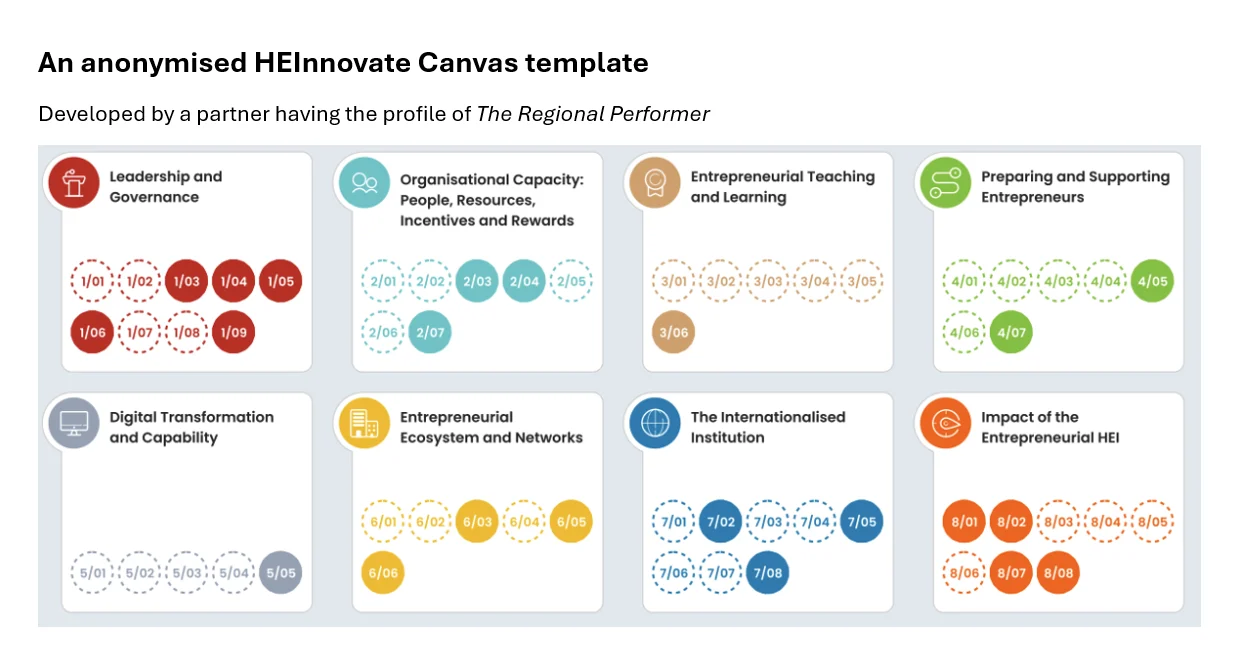
An anonymised HEInnovate Canvas used to translate assessment findings into institutional priorities and action planning.
Building shared priorities through leadership engagement
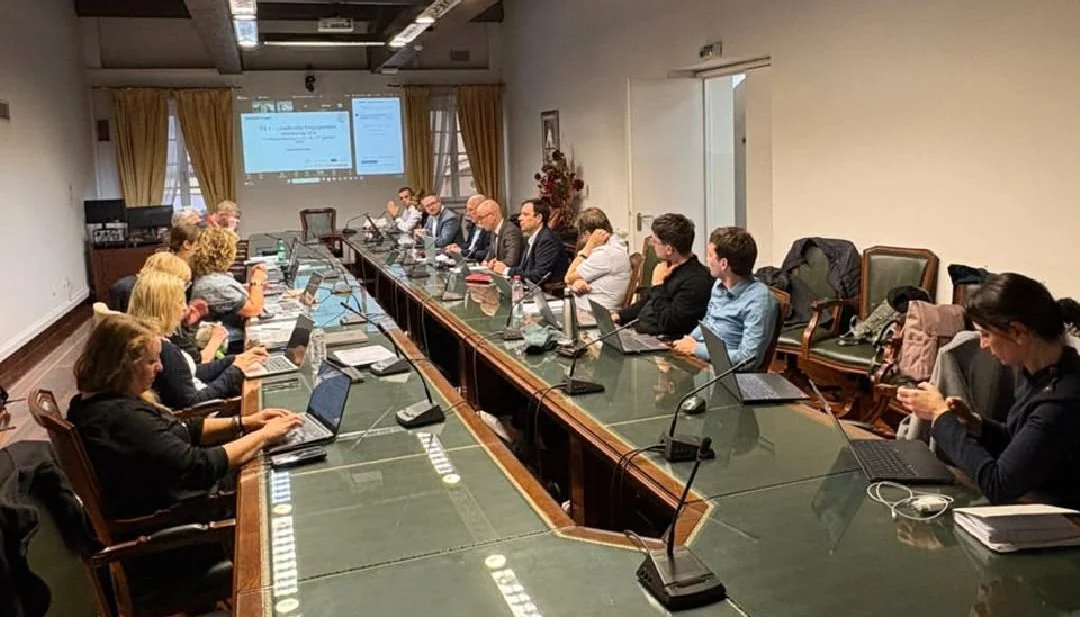
The institutional plans were brought together during the PIONEER+ Leadership Engagement Workshop, held in Corfu on 17 October 2025. Leadership Engagement Workshop_…
During the workshop, institutional teams presented and discussed their priorities. Action Cards selected by at least three of the six participating institutions were identified as predominant priorities and consolidated into a Joint Strategic Action Plan. EIT_Good Practice_PIONEER+_v.04
This process resulted in 19 common strategic priorities, while still allowing each institution to retain actions reflecting its own development needs. EIT_Good Practice_PIONEER+_v.04
The shared priorities covered areas such as leadership and governance, organisational capacity, entrepreneurial teaching, support for entrepreneurs, digital transformation, ecosystem development, internationalisation and impact. The supporting workshop material demonstrates the range of common strategic actions across these areas. Leadership Engagement Workshop_…
Connecting strategy with competence development
The second component of the methodology introduced the EntreComp framework to connect institutional ambitions with the competences needed to implement them.
Six competences were selected across the three EntreComp areas:
➖ Creativity
➖ Vision
➖ Mobilising Resources
➖ Financial and Economic Literacy
➖ Taking the Initiative
➖ Learning through Experience. EIT_Good Practice_PIONEER+_v.04
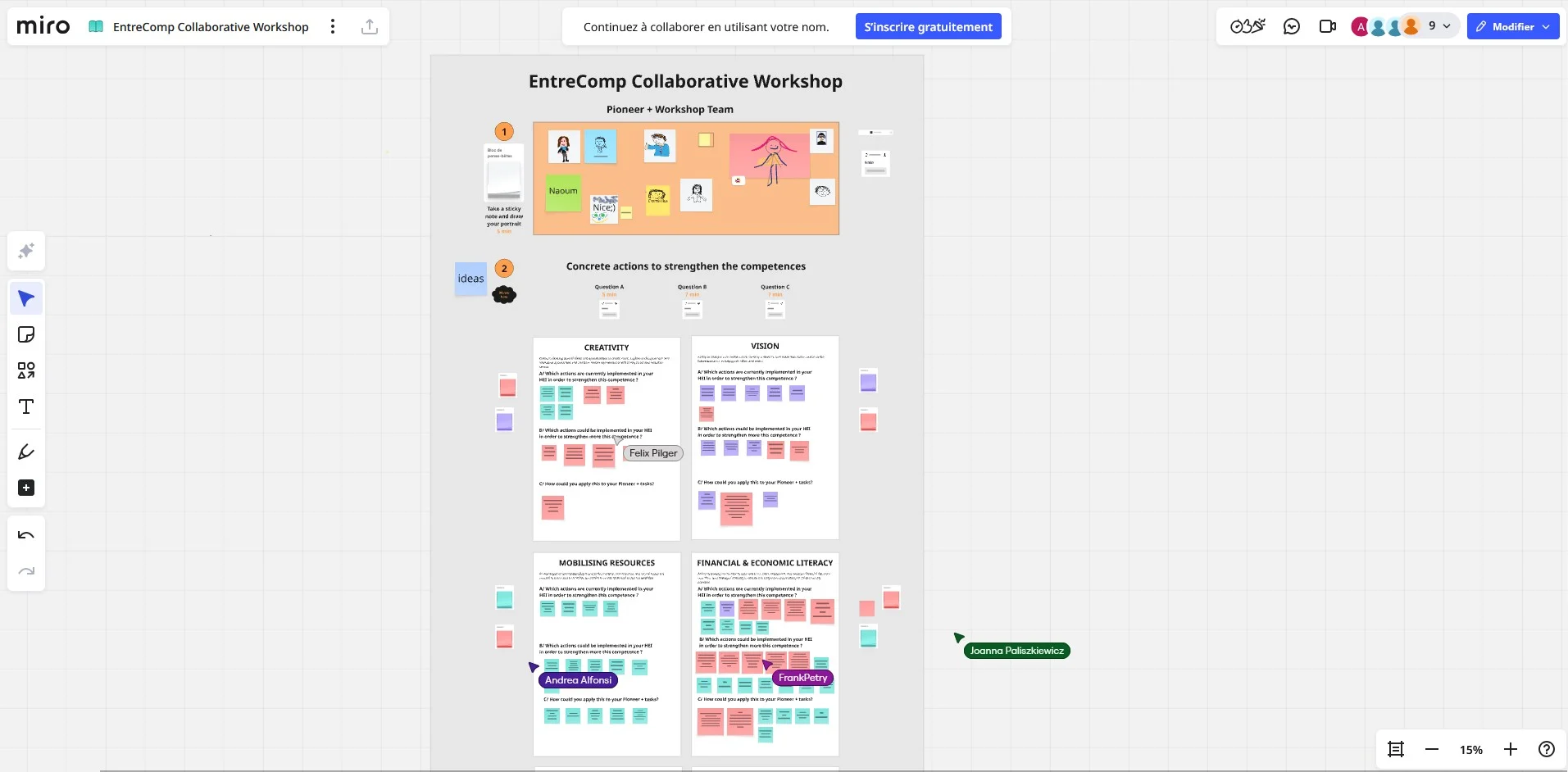
A structured assessment was then used to examine current capacity, future ambitions and competence development needs among top managers, academic staff and non-academic staff.
The assessment consisted of a 38-question anonymous survey, completed by 41 respondents across the six participating HEIs. The results were analysed to identify competence gaps and guide a collaborative workshop with project partners.
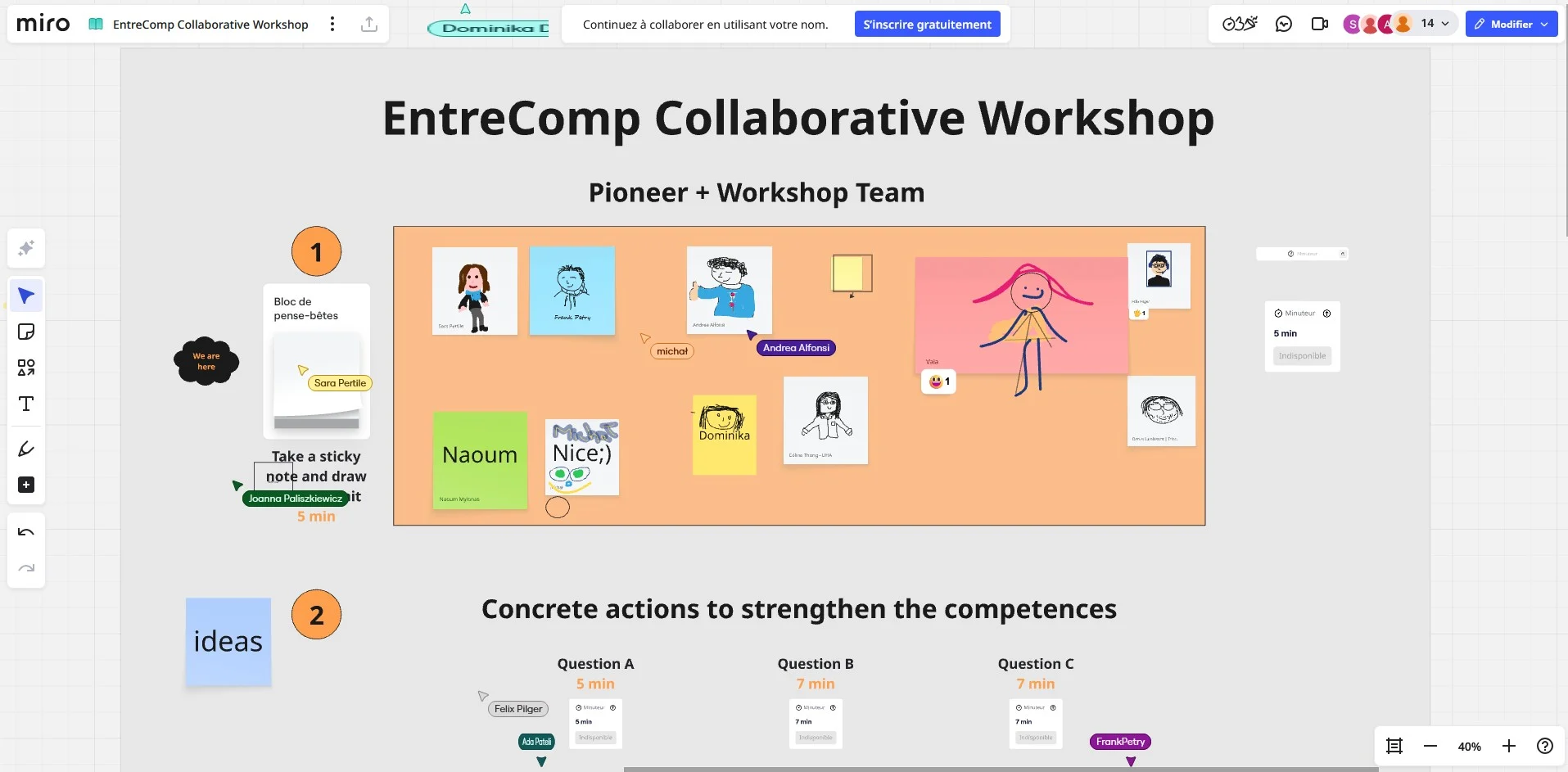
The online EntreComp workshop held on 12 January 2026 helped partners translate the assessment findings into future capacity-building activities, including curricula development, training, mentoring, workshops and seminars.
Results and key learnings
The methodology generated tangible results across the participating institutions.
➖ Six Institutional Vision and Action Plan blueprints were developed.
➖ A Joint Strategic Action Plan with 19 common medium-term priorities was produced.
➖ 41 participants contributed to the EntreComp assessment.
➖ Two workshops engaged 35 participants.
➖ Specific competence gaps were identified and used to inform future capacity-building activities.
The EntreComp assessment also provided useful evidence on existing capabilities. Participants reported strong strategic commitment to innovation and entrepreneurship, while weaker alignment was identified in relation to digital transformation. The assessment also showed limited prior familiarity with EntreComp among many respondents and highlighted competence gaps in areas such as Financial and Economic Literacy and Mobilising Resources.
A central lesson from the process was that institutional strategy and individual competence development should not be designed separately. HEInnovate helps define where the institution needs to go, while EntreComp helps identify the competences required to support implementation. The use of profile-specific recommendations also encouraged more focused discussions and faster consensus than a generic institutional planning process.
A replicable approach for institutional transformation
The methodology offers a practical model for HEIs seeking to connect institutional assessment, leadership engagement, strategic action planning and competence development.
Replication requires strong institutional coordination, active participation from senior management and representation from both academic and professional support units. It is also important to assign clear owners, timelines, indicators and review processes to selected actions, ensuring that assessment becomes a starting point for implementation rather than an endpoint.
Institutions are also encouraged to focus on a manageable set of EntreComp competences linked directly to their strategic priorities, rather than attempting to assess all competences simultaneously. This helps reduce respondent burden and makes the findings more actionable.
By linking institutional diagnosis with targeted action and competence development, the PIONEER+ methodology provides a structured pathway from assessment to implementation, monitoring and continuous improvement.
Supporting resources
➖ D3.1 Report on Leadership Engagement Workshop
➖ D3.2 EntreComp Assessment
➖ MS3.1 EntreComp Framework Assessment
➖ The PIONEER+ Joint Strategic Action Plan
➖ The EntreComp assessment questionnaire.
Discover more about PIONEER+ and its activities supporting innovation and entrepreneurship capacity in higher education. Explore PIONEER+